
A Christmas gift budget that survives December
If you set a Christmas budget, there's a decent chance you went past it. Most advice treats that as a willpower problem. It usually isn't.
A total is not a budget
"We'll spend £600 on Christmas" isn't a budget. It's a wish, because it holds no information about when you've overspent. You find that out in January, from your bank.
Write out everyone you buy for. Everyone, including the ones you always forget until the last week. Put a number beside each name, then add them up.
Two things usually happen. The total is higher than the figure you had in your head, and the list is longer than you expected. Both are useful to know in October and painful to discover on the 20th of December.
One reason you go over: you get stuck
Think about the last present you paid too much for. There's a good chance it went something like this. The occasion was close, you didn't have a good idea, so you bought something more expensive instead.
Price becomes a substitute for knowing what someone actually wants. Sometimes the extra money is topping up a gift you already suspect is generic.
That isn't the only reason people overspend. Buying for more people than you planned, feeling obliged to match what someone spent on you, and wanting to make a good morning for your children all cost more than running out of ideas does. But it's the one you can do something about in advance, and the fix is free.
Start early, for the ideas rather than the deals
The usual argument for shopping early is the sales. The better one is that late shopping is settling, and settling often costs more.
Give yourself a long runway and you stop shopping and start noticing. A handful of overheard remarks across a year, written down, and December stops being a research problem.
Record what you actually paid, while you're paying it
A budget only changes behaviour if you can see where you stand before the next purchase, rather than after all of them.
So record it at the moment of buying. Include delivery, and ignore the saving you told yourself you'd got. You spent what you spent.
The reason this works isn't accounting. Seeing what you've already spent on someone changes the next decision. Seeing it in January changes nothing at all, which is also why whatever the total says in January is next year's real starting figure.
One thing to keep out of it: cards, wrapping, postage, food and the drink you take to other people's houses. All real Christmas spending, none of it gifts. Mixing them in makes the per-person figure meaningless, and the per-person figure is the one you can act on.
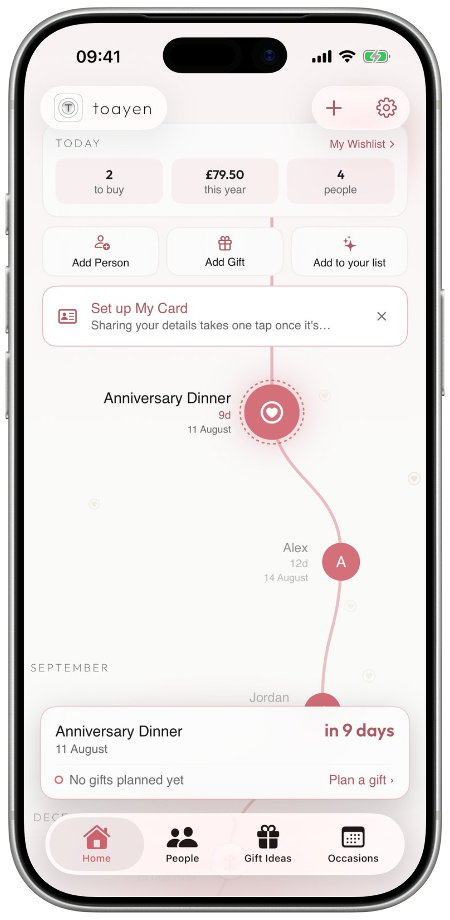
Toayen exists to stop the December scramble. Keep ideas for each person as they come up, mark what you've bought at the price you paid, and see what you've spent per person as you go. All free. Occasion budgets are part of Premium.